
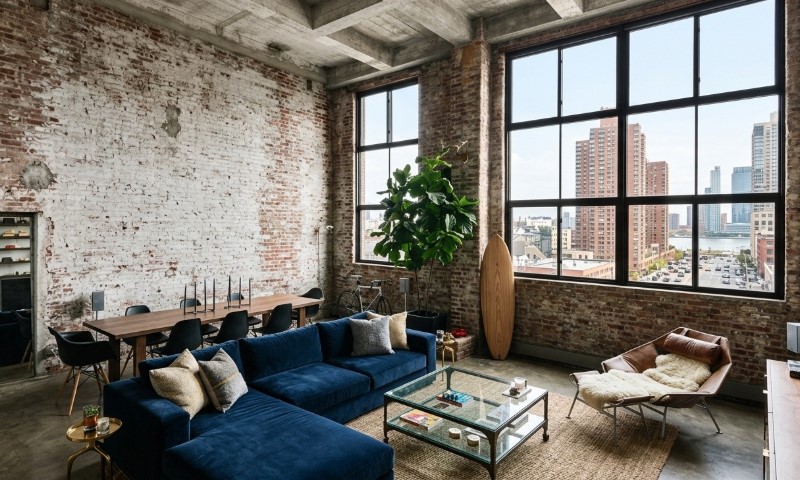

New York has a long connection with industrial design.
Converted warehouses, loft apartments, exposed brick, steel-framed windows, factory-inspired furniture, and adaptive reuse have shaped the city’s visual identity for decades.
Industrial design in 2026 can mean two connected ideas:
- First, it can mean an interior style based on raw materials, exposed structures, loft aesthetics, and functional details.
- Second, it can mean a professional field focused on products, systems, packaging, smart devices, digital interfaces, and user experiences.
Industrial design is still widely popular in New York, but it has changed a bit. It is no longer only about cold, unfinished lofts or raw warehouse spaces.
Why Industrial Design Still Fits New York
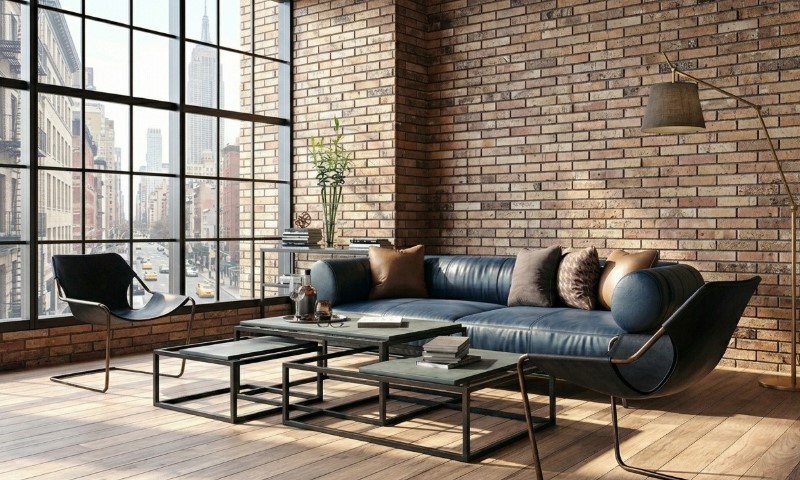
New York already has the architecture that the industrial style needs.
Former factories, warehouses, loft apartments, and mixed-use buildings give the style a natural setting.
Several neighborhoods show why this design still works in the city:
- SoHo
- Tribeca
- Williamsburg
- DUMBO
- Bushwick
Many spaces in these areas already include open layouts, high ceilings, brick walls, exposed pipes, large windows, concrete floors, and visible structural details. These features match industrial interiors without heavy decoration.
Industrial interiors fit New York because they show history, durability, and urban character.
Brick, steel beams, and concrete surfaces connect older manufacturing spaces with modern residential, office, retail, and hospitality use.
Industrial interiors are highly popular in 2026 across homes, offices, cafés, and mixed-use spaces. People want spaces that feel authentic, durable, and full of character instead of overly polished or generic.
Adaptability also keeps the design useful in New York. Loft apartments can function as homes, studios, and workspaces.
Offices can look creative and flexible. Restaurants and cafés can build atmosphere through brick, metal, wood, and lighting.
2026 Version of Industrial Style
View this post on Instagram
Raw materials still matter, but comfort, warmth, lighting, texture, and personal detail now play a larger role.
Core materials give it structure and texture:
- Exposed brick
- Concrete
- Metal
- Reclaimed wood
Polished concrete floors are popular because they are durable, sleek, modern, and clearly industrial. Raw brick walls add texture, color variation, and visible history.
Concrete and exposed brick create the loft-like atmosphere tied to many New York interiors.
Reclaimed brick and reclaimed wood add authenticity while supporting sustainable design goals. Metal and wood combinations balance strength with warmth.
Metal finishes are more varied in 2026. Blackened steel, iron, brushed nickel, aged brass, and wood-metal details keep the identity while avoiding a flat or sterile look.
Softer materials balance raw surfaces. Rugs, oversized sofas, plants, linen, leather, vegan leather, textured throws, and warm lighting make rooms more livable.
Industrial kitchens can also use smoother, more personalized surfaces to balance rougher materials.
Custom printed glass Splashbacks work well with brick, concrete, steel, and wood because they add a clean, durable, heat-resistant, and easy-to-maintain surface without removing the mood.
Color palettes now go past gray, black, brown, and weathered neutrals. Designers use warmer and moodier tones to make the interiors feel more inviting:
- Muted olive
- Moss green
- Navy
- Charcoal blue
- Rust
- Terracotta
- Ochre
- Warm leather tones
Furniture often mixes vintage industrial pieces, reclaimed furniture, repurposed items, modern minimalist seating, modular systems, multifunctional pieces, oversized sofas, and comfortable lounge chairs.
New York apartments, flexible offices, and mixed-use interiors benefit because these choices are practical and expressive.
Strong spaces use rugged and refined elements together. Brick walls and steel shelving work better with soft seating, layered lighting, warm color, and clear proportions.
Sustainability as a Major Reason for Continued Popularity
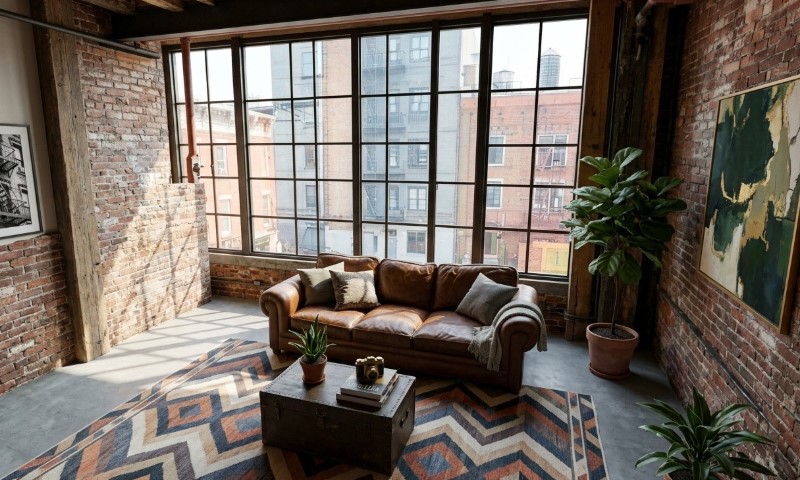
Sustainability keeps industrial design relevant in New York.
Industrial style already works well with materials and methods that reduce waste and extend the life of existing resources.
Common sustainable choices include:
- Reclaimed wood
- Reclaimed brick
- Repurposed vintage furniture
- Durable materials
- Adaptive reuse
- Local materials
- Long-lasting finishes
- Low-waste choices
Eco-friendly decisions are now expected in many interiors, not just in this particular type.
Designers and clients look for repurposed wood, low-energy lighting, locally sourced stone, durable materials, and finishes that last.
Premium projects prioritize timeless material palettes that age well.
Brick, concrete, steel, stone, wood, and leather can develop patina instead of looking outdated quickly. Long-lasting materials reduce frequent updates and support cost efficiency.
Reuse and repurposing also add personality. A reclaimed table, salvaged brick wall, vintage storage cabinet, or repurposed factory light can make a space feel specific rather than mass-produced.
New York connects strongly with adaptive reuse. Older industrial buildings can become several kinds of modern spaces without erasing visible history:
- Lofts
- Studios
- Office
- Retail spaces
- Restaurants
- Boutique hotels
Technology Is Changing Industrial Design, Not Replacing It
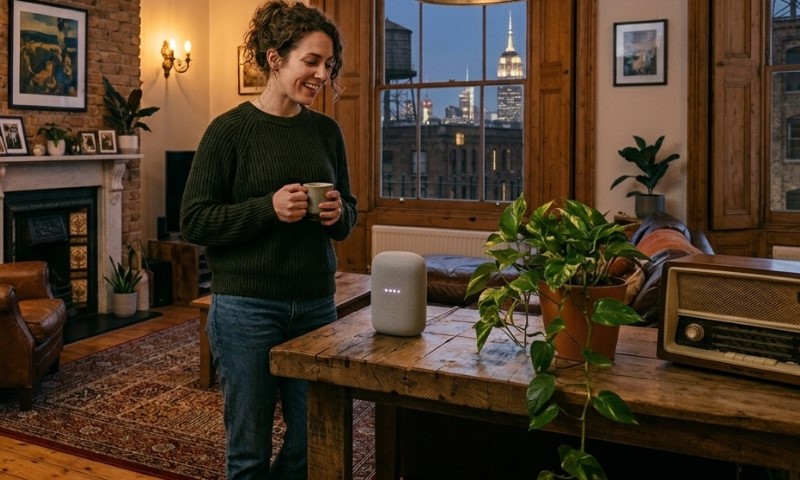
Technology is changing industrial design, but it is not replacing it. Smart lighting, hidden LEDs, voice-controlled systems, connected devices, and integrated workplace technology can work with brick, steel, concrete, and wood.
Modern industrial design softens or hides technology so digital systems do not clash with raw materials. Smart features should improve comfort and function without making the space feel overly futuristic.
Smart homes and offices are normal in 2026. A room can include voice-controlled lighting, app-based climate control, hidden LEDs, integrated speakers, smart locks, and connected devices while still looking warm, raw, and architectural.
Common technology integrations protect the industrial mood while improving daily use:
- Voice-controlled lighting inside vintage-style fixtures
- Hidden LED strips behind shelving or metal details
- Workplace technology built behind architectural features
- Concealed wires, screens, sensors, and controls
New York apartments need convenience without losing character.
A loft can have exposed brick, original beams, and polished concrete while also using smart lighting, efficient heating and cooling, and connected security.
Industrial Design as a Career Field in 2026
Industrial design is still relevant as a career field in 2026, with strongest growth in hybrid roles.
Industrial design now connects physical products, digital systems, sustainability, prototyping, packaging, smart devices, and user experience.
Career projections show strong demand across industrial design-related fields:
| Design Role | Projected Growth | Main Reason |
| Interaction designers | Over 25% | Connect physical and digital user experiences |
| UX designers | More than 20% | Growth in digital services, apps, and online platforms |
| Product designers | 15 to 20% | Demand for sustainable and customizable consumer goods |
| Traditional industrial designers | 10 to 15% | Automation, AI-assisted tools, 3D printing, and product development in automotive, aerospace, and electronics |
| Packaging designers | Over 10% | E-commerce, environmental rules, and changing consumer expectations |
Packaging must protect products, reduce waste, support branding, and meet sustainability standards.
AI, Internet of Things technology, sustainable materials, digital modeling, and prototyping are reshaping industrial design-related occupations.
Designers now need to think about physical form, digital behavior, user interaction, production, branding, materials, and lifecycle impact.
Industrial design includes more than one professional path:
- Physical product design
- Smart-device design
- Furniture design
- Lighting design
- UX design
- Interaction design
- Sustainable materials research
- Packaging design
- Retail experience design
- Human-machine interfaces
- 3D-printed products
- Rapid prototypes
Professional industrial design now covers objects, services, systems, interfaces, and spaces. That wider role keeps the field relevant in New York and other major design markets.
Summary
Industrial design is still popular in New York in 2026, but not in its old purely raw form.
Current design is warmer, more sustainable, more technologically integrated, more comfortable, more personal, more material-led, and more connected to experience design.
Successful New York industrial interiors still use brick, concrete, steel, wood, open layouts, and exposed details.
Yet they also use softer textures, warm lighting, richer color, reclaimed materials, smart systems, modular furniture, and sustainable choices.