


New York’s tech ecosystem in 2025 is no longer a quiet counterpart to Silicon Valley. It’s a $247 billion powerhouse that houses more than 10,000 startups across fintech, AI, health, climate, media, and urban tech. What sets it apart is not size or hype, but precision.
The city’s founders are taking deep, regulated, and messy problems and turning them into product categories that scale.
From AI-driven pharma to climate tech for old buildings, these ten companies show how New York is building an innovation model rooted in substance and long-term impact.
1. Formation Bio
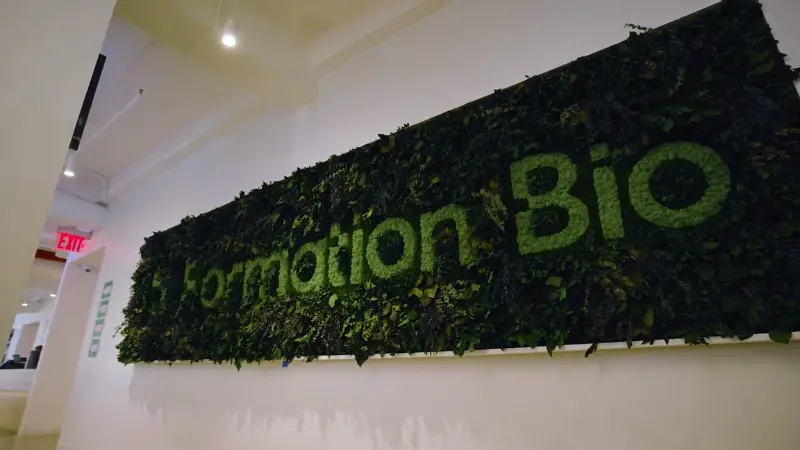
Formation Bio, based in Manhattan, is rewriting how pharmaceuticals move from molecule to market.
Instead of chasing single compounds like traditional biotech firms, it acquires or licenses clinical-stage assets and runs them through an AI-heavy platform designed to simulate and optimize trials in record time.
By mid-2024, Formation Bio had closed a $372 million round led by Sanofi, with backing from a16z and Sequoia. In May 2024, Sanofi also announced a partnership with OpenAI and Formation Bio to build models that accelerate drug discovery.
That deal made clear what insiders already knew: New York had a seat at the table in AI-driven life sciences.
Formation Bio’s expansion has been powered not only by capital but by recruitment specialists such as Ned Capital Recruitment, who have helped the company source leaders fluent in both biotech and data science.
Why It Matters
Formation Bio proves that Manhattan can sustain capital-intensive life sciences without needing West Coast backing.
2. IBM WatsonX AI Labs and the Seek AI Acquisition
IBM’s 2025 acquisition of New York startup Seek AI became one of the city’s most symbolic deals of the year.
Seek AI had built a natural language data agent platform that let non-technical employees query complex enterprise databases like they were chatting with a colleague.
IBM’s move wasn’t just a buyout; it anchored its new WatsonX AI Labs directly in New York.
The Watsonx AI Labs now act as a hybrid accelerator and distribution channel for emerging local AI startups. Through mentorship, technical support, and IBM Ventures funding, smaller firms can scale without leaving the city.
Why It Matters
The Seek AI acquisition closed the loop between New York’s startup agility and IBM’s legacy distribution power, entirely on home turf.
3. Hume AI
View this post on Instagram
Hume AI stands out for giving machines something rarely quantified: empathy. Founded in New York, the company raised $50 million in 2024 to build its Empathic Voice Interface, a multimodal model that reacts to tone, pauses, and subtle emotional cues in human speech.
Throughout 2025, Hume turned that IP into developer-ready APIs used in entertainment, healthcare, and customer service. Instead of robotic assistants, companies can now build voice interfaces that actually “feel” conversational.
Why It Matters
Hume AI embodies New York’s intersection of creativity, human science, and technology, a voice product born from a city that thrives on emotion and expression.
4. Runwise
Runwise is what happens when climate tech meets New York real estate. The company installs smart heating and building controls that let owners monitor and optimize energy use remotely.
By 2025, it had reached more than 10,000 buildings and claimed to have reduced emissions equivalent to removing 100,000 cars from the road.
In August 2025, Runwise secured $55 million to expand nationwide, after already saving building owners $115 million in energy costs.
Why It Matters
Runwise turns infrastructure that used to be purely physical into a software-defined climate asset.
5. Narmi
2024 was a banner year for Narmi. From hosting our first Innovators Retreat on the West Coast to launching a completely revitalized platform product vision, check out what we worked on last year: https://t.co/BzYKt5kUL3 pic.twitter.com/9xNCvP3uAb
— Narmi (@Narmi_Tech) January 14, 2025
Narmi is a fintech powerhouse born out of New York’s financial core. It builds the digital banking stack: account opening, fraud detection, open banking, and instant payments, for community banks and credit unions.
In 2025, Narmi worked with Grasshopper Bank to integrate AI-driven insights into its new MCP server and partnered with Ninth Wave to expand open-finance access. The result: smaller banks can now compete with major institutions without having to migrate to West Coast platforms.
Why It Matters
Narmi’s edge lies in its proximity: banks, regulators, and vendors are all within subway distance.
6. NetBox Labs
NetBox Labs started as an open-source network management project and matured into a full enterprise platform.
By July 2025, it had raised $35 million in Series B funding and secured clients across sectors, including JPMorgan, CoreWeave, Cisco, and Riot Games.
Its model is to turn open-source adoption into enterprise-grade automation, security, and AI integration.
In a year when AI infrastructure became a national bottleneck, NetBox Labs offered visibility tools that helped data centers and enterprises manage complex network topologies in real time.
Why It Matters
NetBox Labs represents the quiet backbone of AI expansion, a company making sure the data highways of 2025 actually function.
7. Empathy
View this post on Instagram
Few startups tackle as delicate a challenge as Empathy. Headquartered in New York, the firm focuses on bereavement, estate management, and everything that comes after loss. It’s part legal-tech, part HR software, and part emotional support platform.
By May 2025, Empathy had raised a $72 million Series C, bringing total funding to $162 million. It serves more than 40 million people through partnerships with insurers, employers, and benefit providers.
Why It Matters
Empathy sits at the intersection of human need and enterprise workflow, transforming one of life’s hardest processes into something manageable and dignified.
8. Optimal Dynamics

Optimal Dynamics operates in Midtown and applies AI to one of the world’s least automated sectors: trucking logistics.
Its artificial decision intelligence helps fleets forecast demand, plan routes, and accept loads to optimize revenue.
In 2025, the company raised $40 million in a round led by Koch Disruptive Technologies. Customers report up to 24 percent higher revenue per truck, thanks to dynamic simulations that make dispatching decisions in seconds.
Why It Matters
Optimal Dynamics proves that AI innovation in New York can be pragmatic and bottom-line focused.
9. Siro
Siro records and analyzes in-person sales conversations. Its mobile app captures voice data from dealerships, showrooms, and retail meetings, then converts it into training and performance insights for sales teams.
In May 2025, Siro raised $50 million from SignalFire to scale its platform, which is already valued at around $270 million. What it captures is a dataset long ignored by tech: live, human-to-human selling.
Why It Matters
Siro proves that AI in New York is not confined to screens or chatbots, it’s designed for people on the move.
10. Scope3
Scope3 connects sustainability with digital advertising and now with AI. Operating from New York, it built a platform that helps advertisers and media companies measure and cut carbon emissions across their ad supply chains.
By 2024, it had raised $25 million from GV and Venrock. In 2025, it expanded its partnerships with IPG Mediabrands and several major publishers, including The New York Times and Vox Media.
It also launched tools to track and reduce carbon footprints within AI model training and data pipelines.
Why It Matters
Scope3 turns environmental responsibility into an operational metric, aligning ad buyers, publishers, and AI firms under the same climate logic.
Summary Table
#
Company
Sector
2025 Signal
Why It Matters
1
Formation Bio
AI-native pharma
Expanded AI model, backed by Sanofi
Positions NYC as a biotech-AI hub
2
IBM watsonx AI Labs
Enterprise AI
Acquisition of Seek AI
Connects startups to enterprise scale
3
Hume AI
Multimodal voice AI
$50M Series B
Creates empathic human-computer interaction
4
Runwise
Climate/urban tech
$55M expansion
Makes buildings part of software ecosystems
5
Narmi
Fintech/core banking
FedNow and Ninth Wave integrations
Exports bank-grade UX from NYC
6
NetBox Labs
Infrastructure
$35M Series B
Powers AI networks and data centers
7
Empathy
Estate and benefits tech
$72M Series C
Merges legal, HR, and emotional workflows
8
Optimal Dynamics
Supply chain AI
$40M funding led by Koch
Improves trucking efficiency and revenue
9
Siro
In-person sales AI
$50M SignalFire round
Turns offline sales into digital assets
10
Scope3
Climate/adtech
Expansion with IPG Mediabrands
Decarbonizes digital and AI ecosystems
Closing Perspective
The ten companies above don’t share a single template. One builds drugs, another dispatches trucks, and another reduces air emissions.
What connects them is where they are and how they work: close to capital, regulation, infrastructure, and customers. New York’s edge in 2025 is not about size or volume. It’s about coherence.
Balancing work and life in a city like New York often demands deliberate boundaries and a clear sense of personal priorities.
Innovation here doesn’t chase fads; it solves institutional problems and monetizes what other cities treat as constraints.
From AI empathy to carbon-aware advertising, the next wave of global tech platforms may very well come from a city where the problems are hardest, and the talent to fix them is already on the subway.