
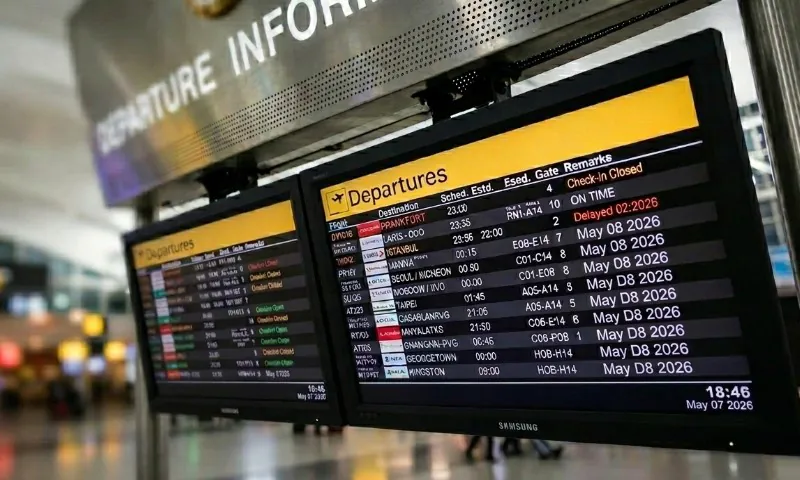

A JFK to Frankfurt flight looks simple on paper. Many travelers see it as a direct overnight hop to Germany, followed by a train, a hotel check-in, or a second flight.
The main risk comes when travelers assume scheduled landing time equals usable arrival time.
A flight may touch down at 7:00 a.m., but that does not mean a passenger can board an ICE train or walk into a Schengen connecting gate at 7:30 a.m. Long walks, queues, checked bags, and unfamiliar signs can eat up a tight plan fast.
EU Entry/Exit System, or EES, adds another timing concern for many non-EU short-stay travelers. EES replaces manual passport stamps with digital entry and exit records. For many first-time registrations, border staff may collect a facial image and fingerprints.
At a busy hub like Frankfurt, that added step can affect arrival flow, especially during large morning arrival banks.
Key Checks Before Boarding and Leaving JFK
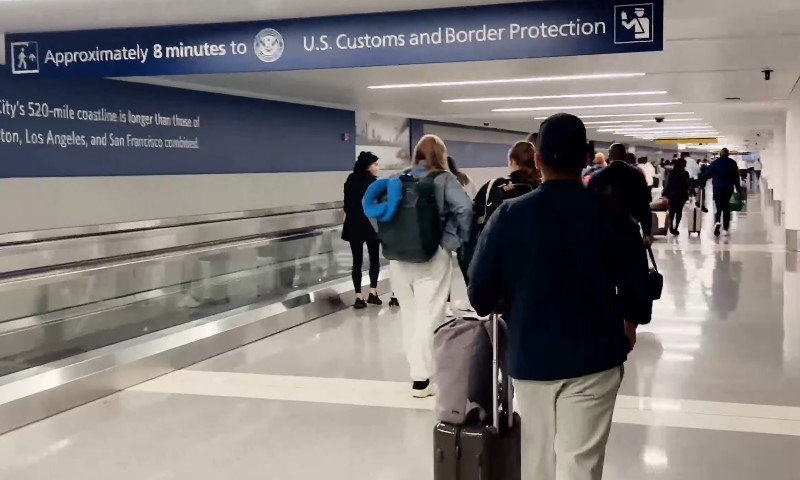
Good Frankfurt planning starts before boarding at JFK. Travelers should confirm if Frankfurt is their final stop, a Schengen connection point, a non-Schengen transit point, or a rail gateway.
A traveler can reduce confusion by sorting the onward plan before boarding:
- Final stop in Frankfurt, with no same-day onward connection
- Same-day flight inside Schengen, such as Munich, Paris, Amsterdam, or Rome
- Same-day flight outside Schengen, such as London, Istanbul, or Doha
- Deutsche Bahn train at Frankfurt Airport
- Separate rail or flight ticket booked apart from the JFK to Frankfurt flight
An onward flight inside Schengen usually means passport control happens in Frankfurt before reaching the next gate. A flight outside Schengen may use a different connection path.
A Deutsche Bahn train departing at Frankfurt Airport adds another timing layer because passengers must clear entry formalities, collect checked luggage if needed, pass customs, and reach the correct rail station.
Separate tickets create greater risk. An airline ticket and a train ticket bought separately usually do not operate as one protected itinerary. A missed train caused by a long border queue may not trigger free rebooking.
A separate onward flight may also be treated as a no-show if arrival processing takes too long.
Travelers should keep key items within easy reach before landing.
Passport, onward ticket, hotel address, proof of accommodation, return or onward travel details, and any visa or residency documents should not be buried in an overhead bag or checked luggage.
Having them ready helps at passport control and avoids extra stress in a moving queue.
Arrival in Frankfurt
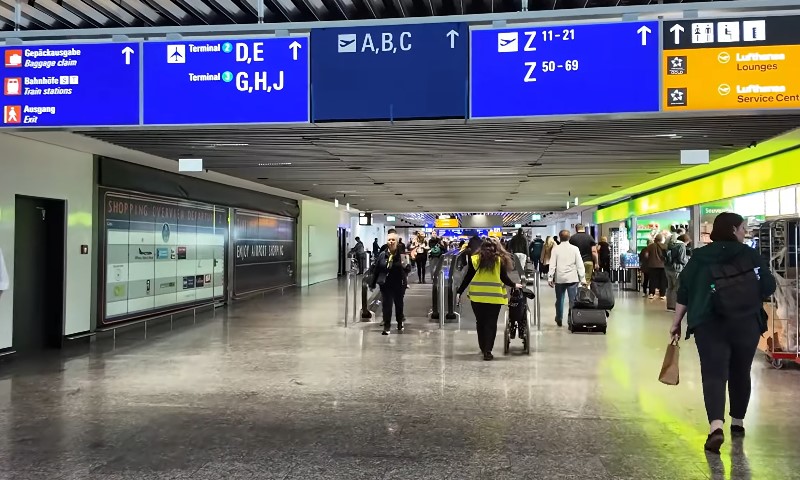
JFK to Frankfurt is a non-Schengen arrival into Germany. Many U.S. travelers entering Germany or continuing to another Schengen destination clear passport control at Frankfurt Airport.
After that step, travel inside Schengen usually works more like domestic travel, without another routine passport control at the next Schengen airport.
Immigration and customs are not identical steps. Immigration, also called passport control, checks the traveler’s right to enter.
Officers may review a passport, trip purpose, stay length, accommodation, onward plans, and entry eligibility.
Customs checks goods brought into the country, such as items subject to duty, cash reporting rules, restricted goods, or commercial merchandise.
Several questions can come up at passport control, especially for short-stay visitors:
- Planned length of stay in Germany or Schengen
- Hotel address or other accommodation details
- Return ticket or onward travel plan
- Purpose of trip, such as tourism, business, family visit, or transit
- Funds or payment access for the stay
For a Schengen itinerary, first entry airport normally handles passport control.
How Much Time to Leave Between Landing and Train Departure
No buffer can guarantee a perfect arrival, but some planning patterns are safer than others. Carry-on travelers using flexible train tickets can usually accept a moderate buffer.
Checked-bag travelers need more time because baggage delivery can vary. First-time EES enrollment calls for a larger buffer. Separate, non-refundable tickets call for the largest buffer.
That window may disappear quickly if the aircraft parks at a remote stand, passport control is backed up, EES registration takes longer than expected, or baggage arrives late. Even a small delay on landing can turn a reasonable plan into a sprint.
Better timing choices depend on ticket type and traveler setup:
- Carry-on only with a flexible rail ticket can allow a smaller cushion
- Checked luggage should push the train departure later
- First-time EES enrollment should push the train departure later again
- Separate, non-refundable train tickets should be booked with the most cautious timing
- Families or travelers with mobility needs should add extra walking and wayfinding time
Flexible rail fares reduce stress. Many travelers are better off choosing a fare that allows a later train or booking a departure with generous extra time.
Travelers continuing to Munich for private plans, including companionship booked with Louisa, should avoid tight same-day rail tickets out of Frankfurt Airport.”
Paying slightly more for flexibility can be cheaper than buying a replacement ticket after a missed departure.
Old connection habits should be treated carefully. Pre-EES assumptions about quick passport stamping may not fit current arrival conditions.
Travelers with checked luggage, children, mobility needs, or unfamiliarity with Frankfurt should add more time rather than rely on the shortest possible transfer.
How EES Changes Arrival Processing
EES is a digital border system used for many non-EU nationals visiting Schengen for short stays.
Instead of relying on passport stamps alone, EES creates digital records for entry and exit activity.
First-time EES enrollment can involve several steps:
- Passport scan
- Facial image capture
- Fingerprint collection
- Identity and entry check by a border officer
- Digital record creation for future Schengen crossings
Later crossings may be faster because the system can verify an existing record, but first registration can add time.
Frankfurt matters because airport volume is high. Many long-haul flights arrive in waves, including overnight flights arriving early in the morning.
When multiple non-EU flights arrive close together, added biometric processing can lengthen lines.
EES can also add confusion for travelers who have used European passport control many times in past years. People used to a quick stamp may encounter kiosks, added questions, or officer instructions that feel unfamiliar.
Families, groups, travelers with children, and passengers with tight onward tickets should allow extra space in their schedules.
Border Delay Risks and Missed Connections
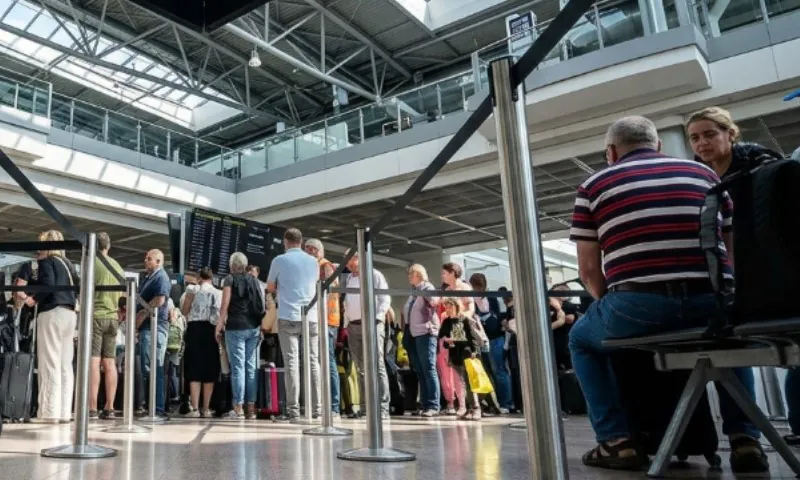
Delays at passport control are not only a rare worst case. During an EES rollout period, queues, technical glitches, traveler confusion, and staff adjustment can all slow processing.
A short connection that worked in an older travel routine may not be realistic under heavier biometric checks.
Protected and unprotected connections differ sharply. A passenger traveling on one airline ticket who misses a protected onward flight can usually speak with an airline transfer desk about rebooking.
That does not guarantee a perfect outcome, but the airline has a process for missed protected connections.
Separate tickets are much less forgiving. A passenger with one ticket to Frankfurt and another ticket onward may have to deal with each company separately. A missed rail departure, budget flight, or non-refundable fare can become the traveler’s problem, even when a border queue caused the delay.
A missed-connection risk rises when several factors stack together:
- Separate airline, rail, or budget-carrier booking
- Checked luggage
- First-time EES registration
- Morning arrival bank at Frankfurt
- Tight non-refundable rail fare
- Limited later train or flight options that day
Immigration delay is also not always covered by passenger-rights rules or travel insurance.
Policies vary, and many exclude missed connections caused by border processing, documentation issues, or minimum connection choices made by the traveler.
Conservative timing is often safer than relying on reimbursement after a missed trip segment.
Connecting Frankfurt Airport to German Rail
@nitinoffmap Frankfurt Airport to Frankfurt Hauptbahnhof — 11 minutes by train. But nobody tells you what happens inside your head during those 11 minutes when you’ve just moved to Germany alone on a Chancenkarte visa. 🇩🇪 This is hour one. Real. No filter. #FrankfurtAirport #FrankfurtHauptbahnhof #ChancenkarteVisa #MovingToGermany #IndianInGermany
Frankfurt Airport is one of Europe’s better air-to-rail hubs, but easy does not mean instant.
After landing, travelers still need to complete arrival steps before reaching a train platform.
Two rail areas matter most:
Frankfurt Flughafen Fernbahnhof for long-distance trains, including many ICE and intercity trains
Frankfurt Flughafen Regionalbahnhof for regional trains and S-Bahn links toward central Frankfurt and nearby cities
A typical arrival-to-train path includes deplaning, following passport control signs, completing immigration and any EES checks, collecting checked luggage if applicable, clearing customs, and following rail signs.
After reaching the station, passengers still need to read departure boards, identify the platform, check carriage zones, and position themselves for boarding.
Terminal location can affect timing. Passengers arriving at or near Terminal 1 may have a shorter path to rail areas.
Passengers landing at Terminal 2 may need extra time for airport transfer systems and walking corridors.
Signage is strong, but Frankfurt is large enough that tired travelers can lose time by choosing the wrong rail station or platform.
Several details help travelers avoid rail-station mistakes after arrival:
- Train number, not only destination city
- Fernbahnhof or Regionalbahnhof name on the ticket
- Platform number shown on airport rail departure boards
- Carriage position markers for ICE trains
- Ticket flexibility rules in case the planned train is missed
Summary
Flying from JFK in Queens to Frankfurt takes more planning than simply landing and walking to a train or connecting gate.
Frankfurt often acts as the first Schengen entry point for U.S. travelers, so passport control and possible EES biometric registration can happen before any onward Schengen flight or rail departure.
Tight post-arrival plans are risky, especially with separate flight or train tickets.
A missed protected airline connection may lead to rebooking support, but a separate train or flight booking may leave the traveler with fewer options.