


Living alone in NYC can feel like a major personal achievement.
Privacy, independence, and control over your own space matter a lot in a city where apartments are often small, crowded, and expensive.
Yet living alone also carries a serious financial penalty often called the “singles tax.”
Not a government tax, the phrase describes extra costs solo renters face because they do not split rent with a partner or roommate.
For many New Yorkers, solo living is not just a lifestyle choice. It is a costly monthly commitment that can affect savings, debt payments, and long-term financial plans.
What Singles Tax Means in NYC
At its core, the singles tax in NYC comes down to one major expense: rent.
Solo renters pay for an entire apartment on one income, while couples or roommates can divide that same housing cost between two or more people.
Although the phrase sounds official, singles tax is not a government charge. It is a shorthand way to describe the extra amount single renters pay because they do not share housing costs.
In NYC, where rent is often the largest monthly bill, that gap can become financially painful very quickly.
Single renters usually face a harder affordability problem because one-bedroom apartments are priced for a household, not necessarily for one person.
A couple earning two incomes can split the same apartment cost, which lowers each person’s monthly rent burden. A solo renter has to absorb the entire amount alone.
Why Rent Creates Most of the Penalty
Rent matters most because it is usually fixed. A single renter cannot cut a $3,900 apartment rent in half unless another person moves in.
Smaller lifestyle changes, such as cooking more often or limiting entertainment spending, may help, but they usually cannot offset thousands of dollars in yearly housing costs.
A common way to measure the singles tax is by comparing solo rent on a one-bedroom apartment with half of that same rent if two people shared it.
In NYC, that gap is especially large because privacy and personal space cost so much.
Key parts of that rent gap include:
- Full responsibility for monthly rent
- Full security deposit or upfront moving costs
- Full broker fee if one applies
- Less ability to absorb rent increases
- Greater pressure to choose smaller units or less convenient locations
Why NYC Makes It Worse
NYC magnifies the singles tax because even modest apartments can have high asking rents.
A one-bedroom does not need to be luxurious to be expensive. Location, transit access, building age, borough, and neighborhood demand can all push rent higher.
Recent NYC rental data shows the singles tax stayed at an all-time high in 2025, even though the yearly figure was flat compared with one year earlier.
Solo renters did not get meaningful relief, even as many renters kept dealing with high housing costs.
In practical terms, that means living alone in NYC often requires tradeoffs. Some renters may give up space.
Others may move farther away, accept older buildings, or spend a larger share of income on rent. For many people, the singles tax turns independence into a major financial hurdle.
Why NYC Is So Expensive for Singles
So, why is NYC so expensive for people who live on their own?
One-Bedroom Rent Pressure
One-bedroom apartments in NYC are expensive, and many are difficult to afford on one income.
Citywide rents increased 24% over five years, while the median asking rent for a one-bedroom rose 22%.
That increase matters because many single renters already had limited budget room before rents climbed.
Higher asking rents make it harder to qualify for apartments, save for move-in costs, or keep housing below a comfortable share of income.
Studios may cost less than one-bedrooms, but they are still expensive and highly competitive.
Many solo renters who want privacy have to choose between high rent, less space, longer commutes, older buildings, or fewer amenities.
Extra Costs Solo Renters Carry Alone
Rent is the biggest factor, but it is not the only one. Solo living means one person pays for everything connected to the home.
Shared households can divide costs that single renters must cover alone.
Even purchases tied to privacy and personal comfort, such as discreet online orders through After Dark Toys, fit into a budget that has no second person helping absorb everyday expenses.
Common costs that weigh more heavily on solo renters include:
- Electricity, gas, and internet
- Groceries and household basics
- Furniture and apartment setup
- Cleaning supplies and small repairs
- Delivery fees, subscriptions, and service charges tied to household use
Individually, some of these expenses may look manageable. Together, they add steady pressure to a solo renter’s monthly budget.
Why Cost Sharing Adds Up
Cost sharing gives couples and roommates a financial advantage that grows over time.
Splitting rent is the biggest benefit, but shared utilities, groceries, and daily household items can also free up cash each month.
A household with two earners may also handle surprises more easily. If one person has an unexpected bill, the other person may still help cover shared rent.
A solo renter has no built-in backup inside the household, which can make emergencies more stressful.
Savings created by shared costs can support bigger financial goals. People who split expenses may have more room to save for a down payment, pay off debt faster, or invest for retirement.
Solo renters often have less flexibility because fixed monthly costs take up more of their income.
How Much More Singles Pay

Data places NYC’s singles tax at about $20,100 per year for people who live alone.
That figure represents the extra yearly cost paid by a solo renter compared with someone splitting the same one-bedroom rent with another person.
A number that large changes the meaning of solo living. It is not just a small premium for privacy. It can equal a major financial obligation that repeats every year.
Couples living together in NYC can save a combined average of about $40,200 per year on rent.
That money can support goals that are often harder for solo renters to reach, including emergency savings, retirement accounts, student loan payments, credit card debt reduction, or a future home purchase.
National Comparison
National data shows the same pattern, but at a smaller scale. In 2024, the national singles tax was reported at $7,110 per year, while cohabitating renters saved $14,220 per year on average.
Newer rental data places the national singles tax higher, at $10,470 per year. NYC’s figure was reported at $23,400 per year, based on a typical NYC apartment rent of $3,900 per month.
Recent city rankings show how far NYC sits above other expensive rental markets:
- NYC: $23,400 per year
- San Jose: $19,488 per year
- Boston: $18,084 per year
- San Francisco: $17,142 per year
- Los Angeles: $15,888 per year
What That Money Could Mean
An extra $20,100 to $23,400 per year can change a person’s financial path.
For some renters, that amount could cover a large share of annual student loan payments.
For others, it could build an emergency fund, reduce credit card balances, or become a major contribution toward retirement.
Solo renters also lose the compounding benefit of shared costs. A person who saves several hundred or several thousand dollars each month can build financial security faster.
A person paying full rent alone may have less room for setbacks, emergencies, or long-term planning.
Bigger Housing Problem
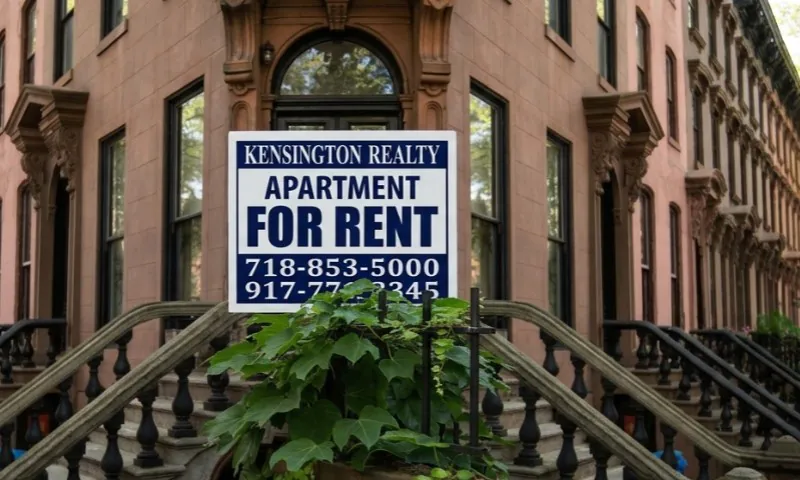
NYC’s singles tax points to a larger housing affordability crisis.
High demand, limited housing supply, and rising rents make solo living difficult for many residents.
Single renters often face the sharpest version of that problem because they are competing in a rental market where apartments are priced for households.
A one-bedroom may technically be meant for one or two people, but the rent often makes more sense for two incomes.
High rent also narrows choices.
A solo renter may have fewer neighborhoods within budget, fewer apartments that meet income requirements, and less ability to move quickly when a decent listing appears.
Borough-Level Impact
Manhattan is not the only place where solo renters feel the pressure.
Singles in four of NYC’s five boroughs, Manhattan, Brooklyn, Queens, and the Bronx, pay more to live alone than singles in any other U.S. city.
That matters because the cost problem has spread across most of NYC.
Living alone is expensive not only in the highest-priced Manhattan neighborhoods, but also in boroughs where renters once expected more affordable options.
Several housing pressures help explain that spread:
- Strong demand near transit and job centers
- Limited supply of lower-cost apartments
- Competition for studios and one-bedrooms
- Rent growth across multiple boroughs
- Higher upfront costs when renters move
As more neighborhoods become expensive, solo renters have fewer easy alternatives inside the city.
NYC Compared With Other Cities
Outside NYC, San Francisco, San Jose, and Boston ranked among the next most expensive cities for people living alone.
Those markets also have high housing costs, strong demand, and limited affordable rental options.
Even so, NYC sits at the top because rent levels are high across a large and highly competitive rental market.
A renter looking for a lower-cost option may still face steep prices across multiple boroughs.
For singles, that creates a difficult reality: independence can require tens of thousands of dollars in extra annual spending.
Living alone may offer privacy and control, but in NYC, it also carries one of the highest financial penalties in the country.
Closing Thoughts
Living alone in NYC is a major financial decision. Privacy and independence can be valuable, but the price is extremely high.
For single renters, the singles tax shows how NYC’s housing market can make basic independence feel like a luxury. Paying for an apartment alone means carrying the full rent, full utility burden, and many household costs without shared support.
Depending on the data source and year, living alone in NYC can cost roughly $20,100 to $23,400 more per year than splitting rent.
That amount can change a person’s ability to save, invest, travel, pay debt, or plan for a home purchase.