


The global online adult entertainment market is expected to reach $88.03 billion in 2026, according to a September 2026 forecast from 360iResearch.
That estimate is up from $81.86 billion in 2025. If the forecast is accurate, the market will add roughly $6.17 billion in one year, an increase of about 7.5%.
The number covers far more than traditional adult video websites. Online adult entertainment now includes subscription platforms, live interaction, creator-led content, paid clips, advertising-supported services and other digital formats delivered through phones, computers and connected devices.
What The $88 Billion Market Estimate Actually Includes
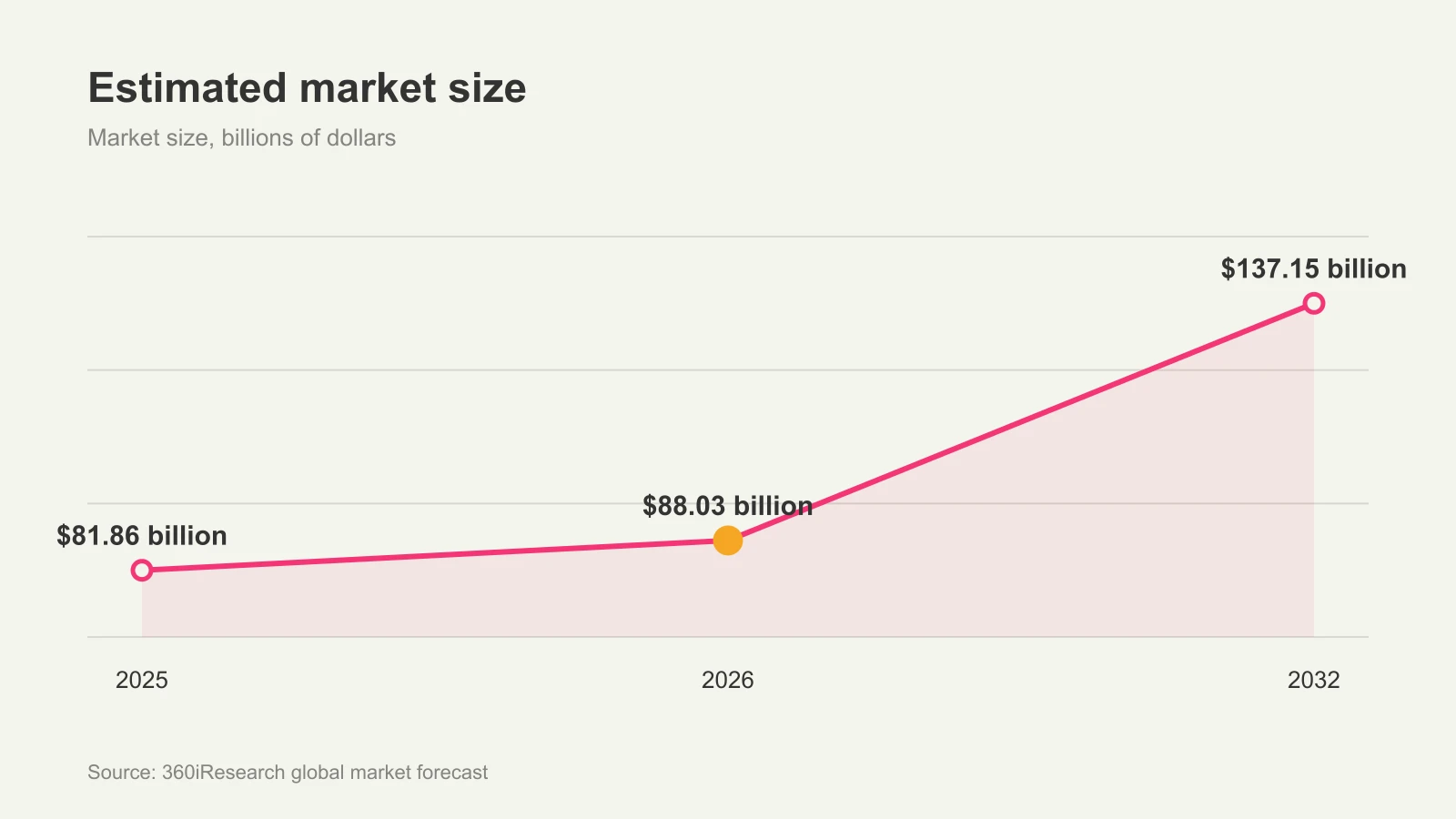
The headline number comes from the 360iResearch global market forecast, which estimates the online adult entertainment market at $81.86 billion in 2025 and $88.03 billion in 2026.
| Year | Estimated Market Size | Annual Increase |
| 2025 | $81.86 billion | Base year |
| 2026 | $88.03 billion | About $6.17 billion |
| 2032 | $137.15 billion | Forecast |
The research company defines the market around digitally distributed adult content and interaction. Its coverage includes video, live services, subscriptions, advertising-supported platforms and creator tools rather than physical adult products sold in stores.
That scope is important because different research firms publish very different estimates. A report that includes physical products, live venues or sexual wellness merchandise is measuring a different commercial market from one focused only on online entertainment.
Geography matters as well. North America remains a major commercial market, but Europe has its own mix of subscription sites, creator platforms, live entertainment and adult-oriented businesses. The UK in particular has a long-established adult entertainment sector alongside one of Europes largest digital media economies. Also, certain services, like Boss Agency, are more common across Europe than in the United States.
We have previously looked at how entertainment habits differ between the US and Britain in our New York and Manchester nightlife comparison. Online adult entertainment follows some of the same geographic reality. A global revenue figure combines markets with very different laws, payment systems, consumer habits and business models.
The Market Has Added More Than $11 Billion Since 2024
The current forecast points to rapid growth over a short period.
Research and Markets, using 360iResearch data published in late 2025, estimated the market at $76.17 billion in 2024 and $81.86 billion in 2025. The newer 2026 estimate reaches $88.03 billion.
| Year | Online Adult Entertainment Market | Increase From Previous Year |
| 2024 | $76.17 billion | Not shown |
| 2025 | $81.86 billion | +$5.69 billion |
| 2026 | $88.03 billion | +$6.17 billion |
Across those two years, the estimated market increases by about $11.86 billion.
The 2025 market forecast linked growth to digital content innovation, improved distribution and demand for interactive formats. The newer 2026 report places the expected compound annual growth rate at 7.64% through 2032.
Not Every Market Report Arrives At $88 Billion
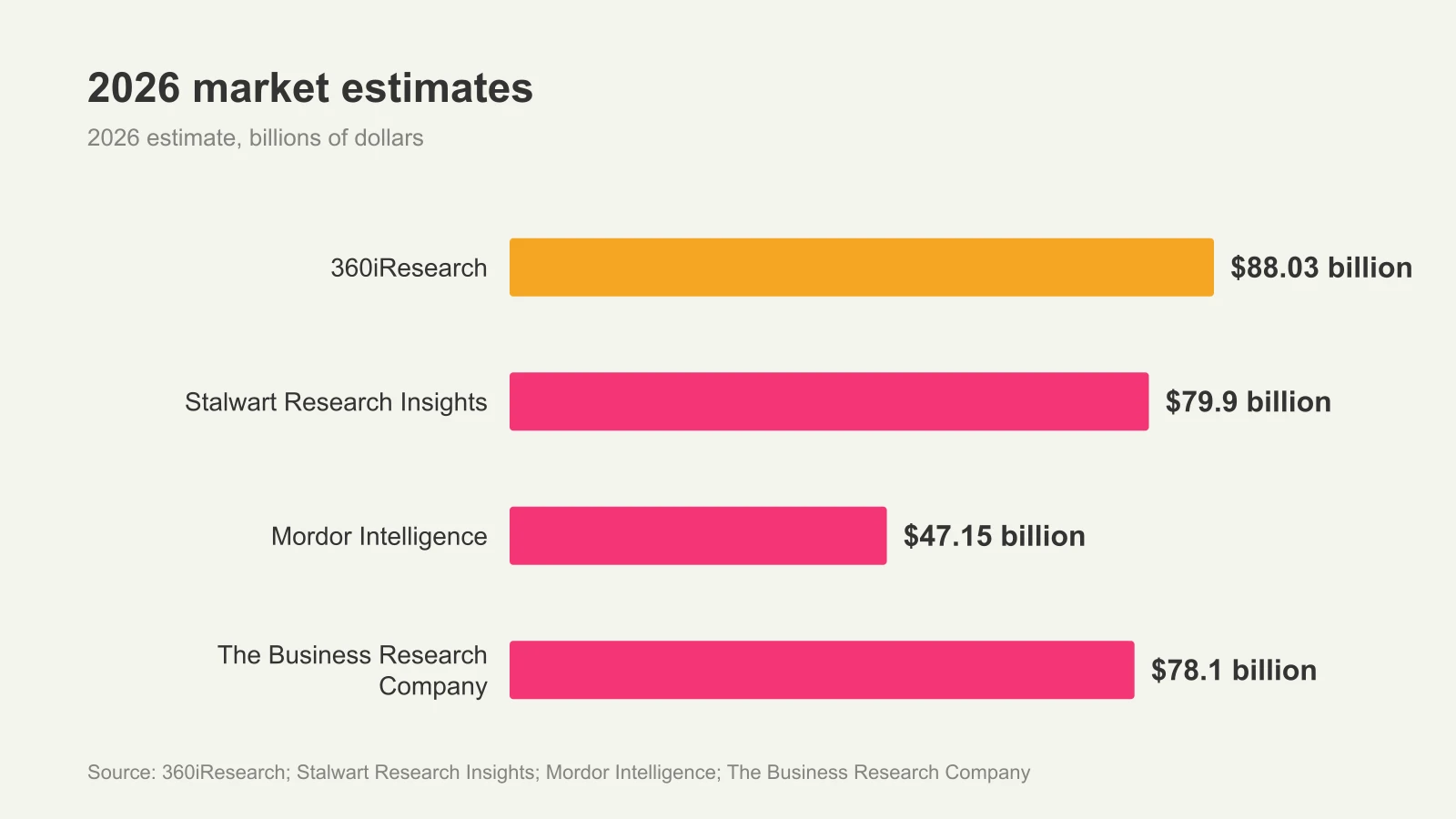
Market-size forecasts should not be read like government economic statistics. Research firms build estimates from their own definitions, company data, industry interviews, modeling and assumptions.
That produces large differences between published reports.
| Research Source | 2026 Estimate | Market Being Measured |
| 360iResearch | $88.03 billion | Online adult entertainment |
| Stalwart Research Insights | $79.9 billion | Online adult entertainment |
| Mordor Intelligence | $47.15 billion | Digital adult content |
| The Business Research Company | $78.1 billion | Adult entertainment |
Stalwart Research Insights, for example, places the 2026 online adult entertainment market at $79.9 billion. Mordor Intelligence estimates digital adult content at $47.15 billion for the same year.
The numbers are not necessarily competing estimates of exactly the same thing. One report may include live interaction and creator subscriptions, while another focuses more narrowly on digital content revenue.
For that reason, the $88.03 billion figure is best described as a market forecast from 360iResearch, not a confirmed total collected from every platform operating worldwide.
Subscription Platforms Changed How Adult Content Makes Money

Online adult entertainment once depended heavily on advertising, individual video purchases and large content libraries. Subscription and creator-led models have added another revenue stream.
Consumers can now pay individual creators directly, subscribe monthly, buy specific content or spend money during live sessions. That changes who receives the revenue and reduces dependence on a small number of major studios.
The growth of recurring payments also makes adult entertainment look more like other digital media businesses. Streaming television, music, gaming and creator platforms all use some version of memberships, subscriptions or small recurring transactions.
Our report on how New Yorkers spend their free time showed how streaming, gaming and digital social activity now sit alongside physical entertainment. Adult content operates inside that same shift toward entertainment delivered directly through personal devices.
Mobile Access Expanded The Potential Audience
Desktop computers once dominated online video. Smartphones changed that relationship.
Adult entertainment no longer requires a home computer, fixed broadband connection or long viewing session. Content can be accessed privately through a phone, and payments can be completed without leaving the same device.
Market researchers repeatedly identify smartphone adoption and internet access as growth factors. Cognitive Market Research, for example, links future online adult entertainment revenue partly to expanding smartphone and internet penetration.
The effect is especially important outside North America and Western Europe. Regions where home computers were never universal can still develop large mobile-first audiences as smartphone ownership and mobile payment access increase.
Live And Interactive Formats Are Taking A Larger Role
Video remains a major part of the industry, but online adult entertainment is increasingly interactive.
Market reports now separate live cam services, adult chat, subscription platforms, premium clips, virtual experiences and standard video streaming into their own commercial categories.
The change affects revenue because interactive content supports direct payment. A viewer may pay for access, time, messages, digital items or personalized material rather than simply viewing an advertisement around a free video.
Creator-controlled platforms also reduce the distance between performer and customer. That has helped move part of the market away from the studio model and toward individual businesses operating through larger digital platforms.
Artificial Intelligence Is Creating A New Category Of Adult Content
View this post on Instagram
Generative AI is beginning to affect adult entertainment in ways that were not part of earlier market forecasts.
AI image generation, synthetic video, conversational systems and personalized virtual characters can create content without a traditional production process. Companies can also use recommendation systems to personalize feeds and identify material a user is more likely to purchase.
The commercial opportunity comes with serious legal and ethical problems. Non-consensual synthetic sexual images, impersonation, copyright disputes and age verification have already forced governments and platforms to consider rules that did not exist during the earlier streaming era.
Market growth therefore does not automatically mean an easier operating environment. Some of the technologies creating new products are also creating new compliance costs.
Age Verification Is Becoming A Major Business Issue
Online adult platforms face growing pressure to establish the age of users rather than relying on a simple confirmation button.
The UK has moved particularly far in that direction under the Online Safety Act. Ofcom requires services that allow pornography to use highly effective age assurance for relevant users.
Under Ofcom age-check requirements, acceptable approaches can include methods based on photo identification, facial age estimation, banking information or other systems capable of establishing that a user is an adult.
Compliance changes the economics of adult platforms. Age assurance services cost money, add another stage to account access and create privacy questions around sensitive personal information.
Large platforms have more resources to build or purchase verification systems. Smaller sites face the same legal expectations with far less compliance staff and technical infrastructure.
Payment Processing Remains One Of The Biggest Constraints

An online platform can have millions of visitors and still struggle to turn traffic into revenue if payment providers refuse to process transactions.
Adult businesses operate under stricter payment rules than most entertainment companies. Banks, card networks and payment processors can impose additional verification, monitoring and recordkeeping requirements.
Platforms therefore face risks that a conventional streaming service does not encounter to the same degree. Losing access to one major payment provider can affect subscriptions, creator payouts and international customers at the same time.
Some companies have responded by adding alternative payment methods or working with processors that specialize in higher-risk industries. That flexibility comes with additional fees and compliance work.
Privacy Has Become Part Of The Product
Adult entertainment involves unusually sensitive customer information.
A platform may process viewing history, subscription records, private messages, payment details, identity checks and age-verification information. A breach can expose far more than an email address and password.
Consumers therefore have strong reasons to care about discreet billing, secure payments and limits on how personal data is stored.
Privacy requirements are likely to become more important as age verification expands. A service that confirms user age without keeping unnecessary identity information has a commercial advantage over one that asks customers to surrender large amounts of personal data.

The UK Market Shows How Growth And Regulation Can Happen Together
The UK is useful because it combines high internet use, a mature digital payments system and a long-established commercial adult sector with increasingly strict online safety requirements.
Adult entertainment there is not one type of business. It includes creator platforms, paid digital content, live entertainment, subscription services and other adult-oriented companies operating under different legal and commercial rules.
At the same time, the Online Safety Act has made age assurance a central requirement for online pornography. Growth therefore takes place alongside higher compliance costs rather than in an unregulated digital market.
The UK example also shows why global forecasts need local context. A revenue estimate can describe worldwide demand, but it does not tell a company what verification, advertising, payment or content rules apply in Manchester, London, New York or another individual market.

North America Remains A Major Revenue Center
North America combines high household internet access, widespread card payments, large creator economies and established subscription habits.
The United States also has a large domestic production industry and major online platforms serving users worldwide.
Legal conditions are becoming more complicated at the state level, however. Several states have introduced or expanded age-verification requirements for adult websites, creating a patchwork of rules rather than one national operating standard.
Platforms have responded differently. Some introduced verification systems, while others restricted access in states where they considered compliance requirements unacceptable or technically difficult.
Europe Faces A Similar Shift Toward Stricter Verification
European markets remain commercially important, but regulators are paying closer attention to child safety, platform responsibility and personal data.
The result is a difficult balance for the industry. Companies need to verify age more reliably without collecting excessive personal information from adults.
Payment systems create another layer because many platforms serve customers across several currencies and national banking systems.
A company operating across Europe therefore has to manage content rules, privacy obligations, payment requirements and age assurance at the same time.
The Market Could Reach $137 Billion by 2032
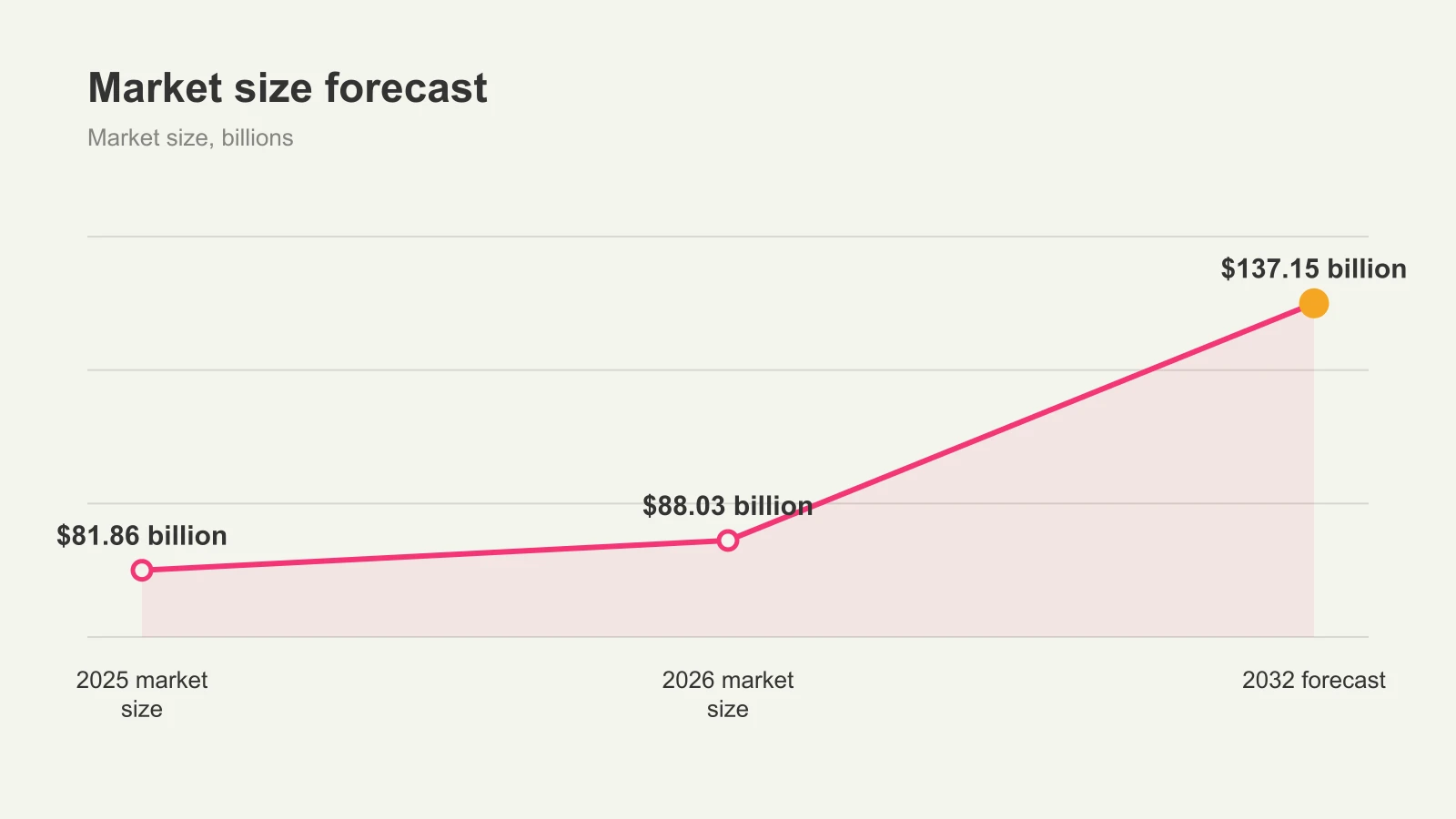
The same 360iResearch forecast behind the 2026 figure expects global online adult entertainment revenue to reach $137.15 billion by 2032.
| Market Measure | Estimate |
| 2025 market size | $81.86 billion |
| 2026 market size | $88.03 billion |
| 2032 forecast | $137.15 billion |
| 2026 to 2032 CAGR | 7.64% |
| Projected increase from 2026 | $49.12 billion |
Reaching that forecast would mean adding about $49.12 billion in annual market value between 2026 and 2032.
The final number could differ considerably. Regulation, payment restrictions, platform consolidation, AI-generated content, creator migration and changes in market definitions can all alter future estimates.
Last Words
An $88.03 billion estimate puts online adult entertainment firmly inside the global digital media economy rather than at its margins.
The industry now combines subscription revenue, individual creators, live interaction, advertising, streaming infrastructure, digital payments and increasingly sophisticated technology.
Growth also brings greater scrutiny. Governments want stronger age checks, payment companies demand stricter compliance and consumers have more reasons to care about privacy.
The market could continue expanding toward the $137 billion forecast for 2032, but future growth will depend on more than audience demand. The companies that remain active will also have to prove that they can handle identity checks, payments, data protection and rapidly changing rules across multiple countries.