
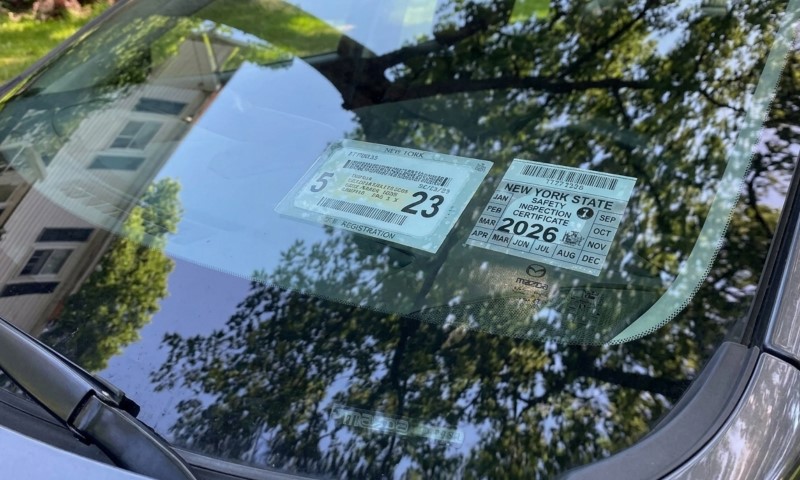

Many drivers assume vehicle registration fees are mainly tied to engine size, horsepower, brand, or purchase price. New York uses a different logic for most passenger vehicles.
Passenger vehicle registration fees in New York are primarily based on vehicle weight, not engine size. A heavier vehicle can cost more to register even if it has a smaller engine than a lighter car.
For 2026, that detail matters more because the vehicle market keeps moving toward heavier SUVs, pickups, and electric vehicles.
Some fee guides describe New York registration as weight-based, with an estimated annualized cost near $28 per year, although the charge is generally billed on a two-year registration cycle.
Registration fees may look like routine DMV paperwork, but the issue reaches further. Heavier vehicles can affect road wear, crash severity, pedestrian safety, energy use, and climate policy.
As a result, weight has become one of the most important numbers attached to a vehicle.
In New York, a heavier vehicle can matter more for registration costs than a bigger engine.
How New York Vehicle Registration Fees Work
New York passenger vehicle registrations usually run on a two-year cycle.
Instead of charging mainly by engine size or vehicle value, New York uses a weight-based chart for passenger vehicles.
Heavier vehicles generally pay higher base registration fees.
DMV-related calculators and fee guides describe New York passenger registration as ranging around $26 for the lightest vehicles to about $140 for the heaviest passenger vehicles, depending on vehicle weight.
Weight is the main factor in the base registration fee, but the final amount paid can include other required charges.
Common added costs may include:
- Title certificate fee
- Plate fee
- County or regional fees
- Taxes for original registrations
- Other one-time charges tied to a new registration
A simple way to read the system is that weight affects the base fee most directly. Total cost can still change based on registration address, vehicle category, plate needs, and first-time registration charges.
Compared with value-based systems, New York’s passenger registration structure is more direct.
A vehicle’s market price does not automatically control the base fee. A less expensive but heavier vehicle can pay more than a pricier lightweight vehicle.
A less expensive but heavier vehicle can pay more than a pricier lightweight vehicle.
For shoppers comparing affordable used cars, that makes vehicle weight worth checking before purchase, not only mileage, engine size, or sticker price.
Why Engine Size Is Not the Main Factor
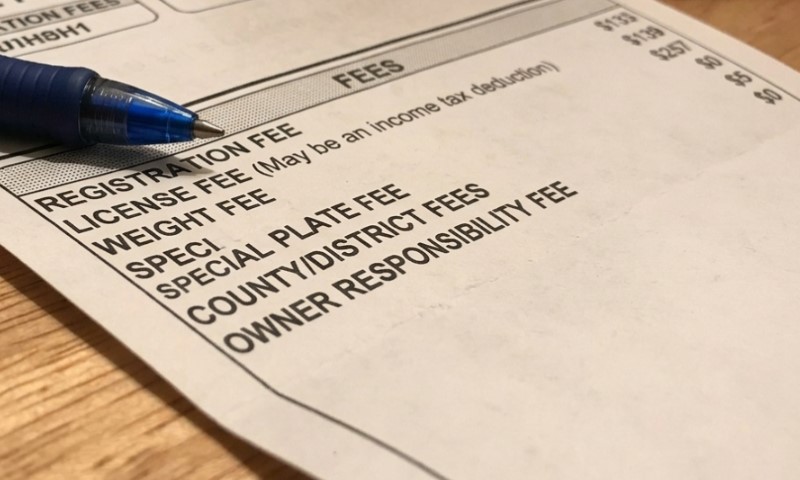
Engine size is not the main basis for most New York passenger vehicle registration fees. A larger engine does not automatically create a higher base registration charge.
Vehicle weight sits at the center of the calculation.
New York looks at listed vehicle weight, often described as unladen weight or vehicle weight, when setting the base passenger registration fee.
A smaller-engine vehicle can cost more to register than a larger-engine vehicle if the smaller-engine model is heavier.
A lightweight sports car may not owe more than a heavy SUV simply because it has a performance engine. A luxury vehicle and a budget vehicle in the same weight class may also have similar base registration fees.
Price, brand, horsepower, and engine displacement do not automatically decide the base registration charge. Weight is the key number.
Pickup trucks can add another layer. A pickup registered as a passenger vehicle may still fall under passenger-vehicle rules if it is used only for non-commercial purposes.
In that case, weight still plays a central role in the fee calculation.
Why Weight Matters More – Policy Logic
Vehicle weight matters because it connects registration fees to public costs. Heavier vehicles place more force on roads, may increase crash severity, and can create higher risk for pedestrians and cyclists.
Policy debates increasingly treat vehicle mass as more than a DMV detail. Weight can act as a proxy for several concerns at once:
- Road wear and infrastructure strain
- Crash severity in collisions with smaller vehicles
- Higher danger for pedestrians and cyclists
- Greater energy use in many vehicle categories
- Emissions potential, depending on drivetrain and fuel source
Climate policy analysis has pointed to registration fees as one tool for discouraging carbon-intensive vehicles.
Fees can be linked to emissions-related vehicle features, including weight, drivetrain, or both.
Weight matters in that discussion because it can relate to energy demand. Heavier vehicles often need more energy to move, regardless of fuel type.
A gas-powered heavy SUV may burn more fuel, while a heavy EV may require a larger battery and more electricity.
Engine size tells only part of the story.
Vehicle mass tells policymakers more about infrastructure strain, safety risk, and energy demand.
Heavy SUVs and the Push for Higher Fees
@stangry5.0 The tax man is always gonna get his cut😂 #stangry #carcommunity #dmv #carsoftiktok #taxes #boosted #moxyperformance #fyp
Debate around heavy SUVs and trucks has grown because New York already charges by weight, but critics argue current fees may be too low for the risks and costs linked to larger vehicles.
A proposed New York bill would raise fees on heavier vehicles to better account for pedestrian risk and infrastructure strain.
Supporters argued that current weight-based registration fees do not fully capture the damage and danger tied to very heavy passenger vehicles.
Concrete examples show why the debate matters. A 2,877-pound Honda Civic was cited as paying $47 every two years. A vehicle roughly twice that weight was cited as paying $112.50 every two years.
At first glance, the heavier vehicle pays more.
Critics still argue the gap is not large enough when public safety and road costs are considered.
Safety data has added pressure to the debate. One cited study estimated that every additional 1,000 pounds of vehicle weight raises the chance of fatality by 46%.
That number helps explain why policymakers are looking closely at mass, not only emissions or engine type.
Proposed higher fees for heavy vehicles would phase in over six years. Passenger vehicles would be covered, while large vehicles used for work could apply for commercial registration. After annual dedications, three quarters of revenue would fund bike and pedestrian safety improvements.
Heavy-vehicle fees are not only about collecting more money. Main policy goals include safer streets, better infrastructure funding, and stronger cost alignment between vehicle choice and public impact.
EVs Complicate the Weight Debate

Electric vehicles make weight-based registration fees more complicated. EVs reduce tailpipe emissions, but many are heavier than similar gas-powered vehicles because batteries add substantial mass.
A simple weight-based system can therefore affect some EVs more heavily even though they cut tailpipe pollution. That creates a policy tension.
New York wants cleaner vehicles, but heavier vehicles can still create infrastructure and safety concerns.
A New York bill under consideration included an important adjustment: heavier-vehicle registration fees could include a waiver for electric vehicle battery weight.
That detail matters because it separates battery mass used for electrification from extra bulk tied to vehicle size.
Public debate around weight-based fees also connects to the gas tax.
As EV adoption grows, gas tax revenue becomes less reliable because EV drivers buy little or no gasoline. Some proposals frame weight-based vehicle fees as a replacement or supplement.
Opinions differ on what a fair system should measure. Some people support weight-based fees because heavier vehicles affect roads more.
Others argue mileage should also count, since a heavy vehicle driven rarely does not use roads the same way as a lighter vehicle driven many miles.
A fairer model may need several factors at once: vehicle weight, miles traveled, drivetrain, and battery weight. EVs show why weight matters, but also why one simple rule may need careful adjustments.
Closing Thoughts
New York passenger vehicle registration fees are already built around weight more than engine size.
A heavier vehicle can face a higher base registration fee, even if it does not have the biggest engine, highest horsepower, or highest price.
Current policy debates are moving even further toward weight because heavier vehicles raise concerns about road wear, pedestrian risk, cyclist safety, crash severity, and climate impact.
Heavy-SUV fee proposals show that lawmakers are looking past engine size and focusing more on mass, infrastructure costs, and public safety.
As SUVs, pickups, and EVs continue shaping the market, New York’s weight-based registration system will likely stay an important issue for drivers and policymakers.